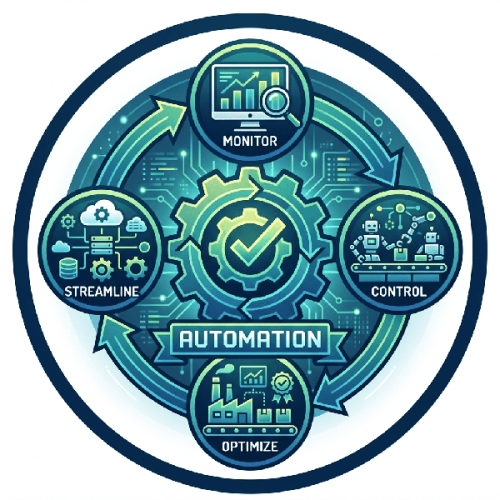
Quality Management Automation involves utilizing digital systems, software ecosystems, and connected hardware to monitor, evaluate, and maintain product standards throughout the manufacturing lifecycle. By shifting away from manual paperwork, periodic sampling, and retrospective audits, automation embeds quality control directly into the production process.
This ensures that defects are prevented or caught in real time, shifting the operational paradigm from Quality Control (detecting defects after production) to Quality Assurance (preventing defects before they occur).
Core Components of an Automated Quality System
An automated Quality Management System (QMS) bridges the gap between physical inspection on the factory floor and digital tracking in compliance databases.
[ Inline Inspection Sensors ] ---> [ Real-Time Edge Analytics ] ---> [ Enterprise QMS / ERP ] ---> [ Continuous Process Correction ]
1. Automated Inspection Systems
Instead of human operators visually inspecting a fraction of produced goods, automated hardware handles $100\%$ inline inspection at full production speeds.
-
Machine Vision Systems: High-speed, high-resolution cameras paired with AI algorithms inspect components for surface defects, missing parts, dimensional accuracy, or color variations in milliseconds.
-
Laser Scanning & Metrology: Coordinate Measuring Machines (CMMs) and 3D laser scanners verify physical product dimensions against CAD models with micron-level tolerances.
2. Digital QMS Software (eQMS)
A centralized cloud platform that manages quality workflows, documentation, and compliance frameworks.
-
Non-Conformance Tracking: Instantly logs deviations, segregates defective batches digitally, and halts relevant production lines automatically.
-
CAPA Automation: Automates the Corrective and Preventive Action (CAPA) workflow, routing incidents to proper engineering teams and tracking root-cause analysis progression.
3. Integrated SPC (Statistical Process Control)
SPC software continuously ingests live measurement data from shop-floor sensors. It uses mathematical models to map process variability.
-
Predictive Alerting: If a machine’s output begins drifting toward the upper or lower control limits—even if the parts are still technically within spec—the SPC system flags the drift, allowing operators to calibrate the machine before it produces actual scrap.
The Automated Quality Workflow
Integrating quality data across the enterprise ensures immediate visibility and rapid response to defects.
-
Data Capture: Inline sensors measure a critical characteristic (e.g., the seal strength of an organic food package or the thickness of a metal bracket).
-
Analysis & Flagging: The local edge processor compares the measurement against the engineering CAD design or product specifications.
-
Containment: If a defect is found, an automated pneumatic arm rejects the item from the conveyor belt, and the batch number is flagged in the ERP system.
-
Root-Cause Resolution: The eQMS triggers a corrective action ticket, linking the exact time, raw material supplier batch, and machine parameters together for immediate engineering review.
Strategic Benefits for Manufacturing Units
-
Zero-Defect Shipping: $100\%$ automated screening ensures that faulty or contaminated products never reach the customer, protecting brand reputation and reducing warranty claims.
-
Reduced Material Scrap: Catching a process drift or machine error early prevents entire production runs from being wasted.
-
Regulatory Compliance Readiness: For highly regulated sectors (such as pharmaceuticals, aerospace, or organic food production), automated systems maintain an unalterable, timestamped digital audit trail. This simplifies compliance with standards like ISO 9001, FDA regulations, or local agricultural certifications.
-
Elimination of Human Subjectivity: Automated sensors provide objective, repeatable measurements, removing human fatigue or bias from inspection lines.

krishna
Krishna is an experienced B2B blogger specializing in creating insightful and engaging content for businesses. With a keen understanding of industry trends and a talent for translating complex concepts into relatable narratives, Krishna helps companies build their brand, connect with their audience, and drive growth through compelling storytelling and strategic communication.